Ordering banners for events and exhibitions involves more than simply choosing a design and sending it to print. From selecting the right material to preparing artwork correctly, there are several factors that can affect how your banner looks, performs and arrives on time. Whether you are preparing for a trade show, conference, retail event or outdoor promotion, understanding the process can help you avoid delays and achieve a more professional result.
This practical guide explains how to order banners for events and exhibitions, including file setup guidance, material choices, sizing considerations and what information to prepare before placing your order.
Before ordering, it is important to understand exactly where and how the banner will be used. Indoor exhibition banners often have different requirements from outdoor event signage, and the environment will influence decisions around material, size and finishing.
Ask yourself a few key questions first:
Having clear answers early on makes the ordering process much smoother and reduces the risk of choosing the wrong specification.
Different banner materials are suited to different environments and display methods. Understanding the main options can help you select the most practical solution for your event.
PVC remains one of the most commonly used banner materials because it is durable and suitable for both indoor and outdoor use. It works well for temporary event signage, promotional displays and exhibition graphics.
PVC banners are often chosen when durability and weather resistance are important.
Mesh banners contain tiny perforations that allow air to pass through. This makes them useful for outdoor events where wind exposure could otherwise damage the banner or supporting structure.
They are commonly used on fencing, scaffolding and large exterior displays.
Fabric banners offer a softer, more premium appearance and are often used for exhibitions, conferences and indoor branding displays. They are lightweight, easy to transport and tend to reduce glare under exhibition lighting.
For businesses attending multiple events, fabric options can also fold more easily for storage between uses.
Banner size plays a major role in visibility and readability. A banner that looks clear on screen may become difficult to read if the dimensions are not suitable for the venue.
When deciding on size, consider:
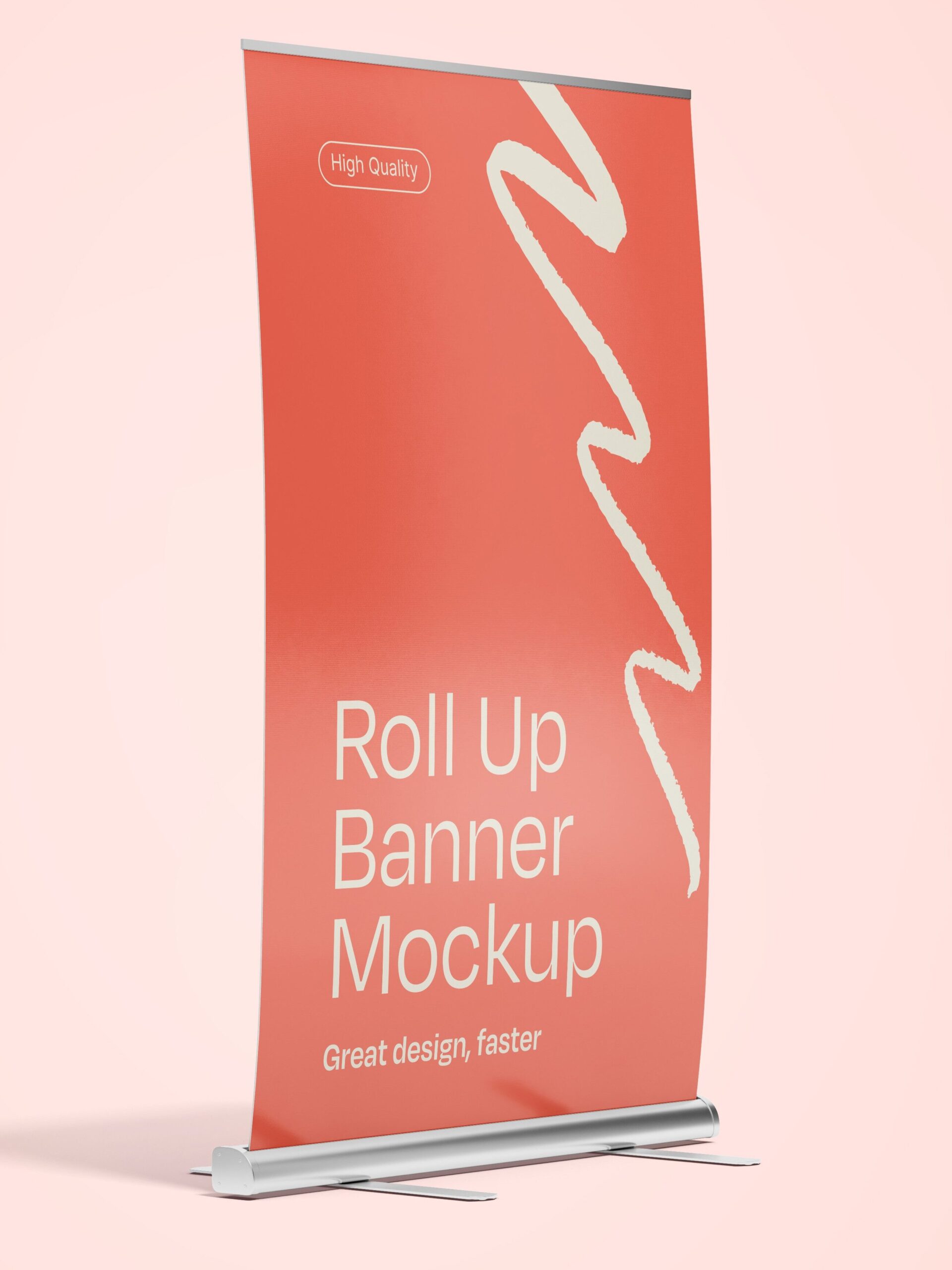
For exhibition stands, roller banners are commonly produced in standard widths such as 800mm, 850mm or 1000mm. Larger hanging banners or wall graphics may require custom dimensions depending on the venue.
If you are unsure, it is helpful to gather measurements of the event space before ordering. Even rough dimensions can prevent scaling issues later.
One of the most common causes of delays when ordering banners for events and exhibitions is artwork that is not supplied correctly. Preparing files properly from the start can save time and reduce the need for revisions.
Most print suppliers will request artwork in one of the following formats:
PDF files are often preferred because they preserve fonts, layout and image quality more reliably.
Low-resolution images can appear blurred or pixelated when enlarged onto banners. As a general guide, artwork should be supplied at a minimum of 150dpi at full size, although some larger format applications may vary.
Always use original high-quality images where possible rather than screenshots or images copied from websites.
Artwork should usually be supplied in CMYK colour mode rather than RGB. This helps minimise unexpected colour shifts during production.
It is also worth noting that colours can appear differently on fabric compared with PVC or other materials.
If the design extends to the edge of the banner, bleed should normally be included. Safe areas are equally important, particularly if eyelets, hems or pole pockets are required.
Keeping text and logos away from the edges helps avoid important content being obscured during finishing.
Providing accurate information upfront can speed up production and reduce the number of clarification emails during the ordering process. Therefore reducing costs.
Before placing your order, prepare the following details:
Sharing event deadlines early is particularly important during busy exhibition periods, as production schedules can become tight.
Turnaround times for banners can vary depending on specification, quantity and finishing requirements. Simple indoor banners may be produced relatively quickly, while larger exhibition graphics or specialist materials can require additional lead time.
Artwork approval also affects production speed. Delays often occur when files need correcting or when design amendments are made late in the process. Your print partner will probably only give lead time after artwork approval.
Ordering earlier also gives more flexibility if changes are needed after proofing.
Knowing how to order banners for events and exhibitions can make the entire process more efficient and help avoid unnecessary complications. From selecting the right material to preparing artwork correctly and allowing enough production time, careful planning plays a major role in achieving a professional final result.
If you are preparing for an upcoming event and would like to explore suitable display options, Gemini Print Solutions provides more information through its Large Format and Display Printing page.
Or feel free to get in contact with us via our contact form or by emailing hello@geminiprintsolutions.co.uk.