

Planning a magazine print run in the UK can be complex, with costs affected by many factors. Knowing what drives pricing helps you make informed decisions, balance quality with budget, and avoid unexpected expenses.
Key Factors Affecting Magazine Printing Costs:
By understanding these key cost drivers, from quantity and page count to paper, binding, finishing, and distribution, you can plan effectively and choose the most cost-efficient options for your magazine project.
If you want to learn more and explore each factor in detail, continue reading the full guide below.
Short print runs cost more per copy because fixed setup costs remain the same regardless of quantity. Every magazine job requires artwork checks, press setup, calibration, and some initial waste during make-ready. These costs do not change whether you print 100 or 10,000 copies, so smaller runs spread fixed costs across fewer units, raising the price per magazine.
For example, if the total setup cost is £300, printing 100 copies means £3 per copy just to cover setup, before paper, ink, and finishing. Printing 1,000 copies reduces the same £300 setup cost to 30p per copy. Higher volumes spread fixed costs more efficiently, lowering the unit cost.
If this magazine is intended to be a regular publication, consider discussing storage or staggered release options with your print supplier. This can help reduce the unit cost while avoiding large storage needs. Requesting quotes for different quantities lets you compare pricing and decide what suits your budget.
More pages increase cost because each extra page requires additional paper, ink, and press time. A magazine with more pages uses more sheets, raising material costs. It also takes longer to print, fold, collate, and bind, increasing machine time and labour. Longer runs may need extra handling during finishing and packing.
In short, more pages mean more production work, raising overall cost and cost per copy. When planning your magazine, consider whether all content is essential, as optimising page count can help manage the budget.
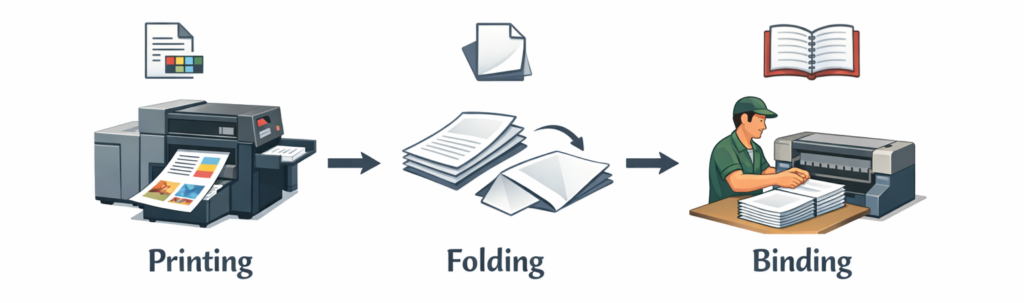
The printing method you choose has a significant impact on magazine printing costs, turnaround time, and the most economical print quantity.
There are two main production methods used for magazines in the UK: digital printing and lithographic (litho) printing. Each is suited to different volumes and project requirements.
| Feature | Digital Printing | Lithographic (Litho) Printing |
| Best For | Short-run magazines and fast turnaround projects | Medium to large circulation magazines |
| Setup Process | No printing plates required | Requires printing plates and traditional press setup |
| Initial Setup Cost | Low | Higher due to plate creation and press setup |
| Cost Per Copy | Cost-effective for small quantities | Becomes more cost-effective at higher volumes |
| Quantity Suitability | Ideal for low volumes and on-demand printing | Ideal for larger print runs |
| Turnaround Time | Generally faster | Typically longer due to setup requirements |
| Personalisation | Suitable for variable data and personalised content | Not typically used for personalised editions |
| Common Uses | Short-run magazines, test runs, personalised editions, tight deadlines | Large circulation magazines, retail distribution, regular publications, high-volume corporate magazines |
| Print Consistency | Excellent for short runs | Excellent colour consistency across long runs |
| Finishing Options | Wide range available | Wide range available, especially suitable for premium production |
Paper choice affects cost, print quality, finish, and durability.
Silk paper has a smooth, slightly muted surface, offering strong colour reproduction without excessive shine. Gloss paper has a shiny coated surface, making images vibrant and sharp but can show fingerprints. Uncoated paper has no coating, giving a natural, textured feel with softer colours, often used for editorial or premium minimalist designs.
Thickness is another important factor, usually measured in gsm (grams per square metre). Higher gsm produces a thicker, sturdier sheet, improving durability and perceived quality but increasing cost and weight. Heavier paper can also affect postage and handling.
Quick Guidance Table:
| Paper Type | Typical GSM | Best For |
|---|---|---|
| Silk | 100–130gsm (internals) | General consumer magazines, balanced colour reproduction |
| Gloss | 90–130gsm (internals) | Image-heavy magazines requiring vibrant finish |
| Uncoated | 80–120gsm (internals) | Editorial designs, minimalist or tactile publications |
| Cover Stock (Silk/Gloss) | 200–300gsm | Magazine covers, especially perfect-bound editions |
Heavier paper increases the magazine’s overall weight, which can raise postage and handling costs depending on distribution and volume. Consider this when choosing cover and internal stock, especially for nationwide mailing.
Binding assembles printed pages to form the finished magazine, keeping pages in order and shaping the final structure. The method chosen affects appearance and cost.
Saddle stitch uses staples through the centre fold and is cost-effective for lower page counts. Perfect binding uses adhesive along the spine, giving a premium, book-style finish and suiting higher page counts.
| Binding Type | Best For | Typical Page Range | Cost Impact |
|---|---|---|---|
| Saddle Stitch | Shorter magazines, newsletters, promotional publications | Up to approx. 64 pages (depending on paper thickness) | Low |
| Perfect Bind | Thicker magazines, premium publications, retail-style magazines | 40 pages and above (ideal for higher page counts) | Medium to High |
If you are unsure which binding option is best for your magazine, request a tailored quote and we will recommend the most suitable and cost-effective solution for your project.
Finishing options are additional processes applied after printing to enhance the look, feel, and durability of a magazine. While not essential, they can significantly improve the perceived quality of your publication and help it stand out.
| Finish | Best For | Typical Use | Cost Impact |
|---|---|---|---|
| Lamination (Matt or Gloss) | Cover protection and durability | Adds a protective layer to the cover, improves longevity | Medium |
| Spot UV | Highlighting logos, titles, or design elements | Adds high-gloss contrast to specific areas | Medium |
| Embossing | Creating a raised, tactile effect | Enhances branding or key design features | Medium to High |
These finishes can be used individually or together, depending on the desired result and budget, to create a more premium and professional final product. If you would like advice on which finishes would best suit your magazine and budget why not ask to our dedicated team of experts!
Turnaround time refers to how quickly a print job must be produced and delivered, affecting planning and cost.
Faster deadlines can increase costs due to prioritised scheduling, overtime, and immediate press access. Jobs may need to move ahead of others, and expedited material sourcing or special logistics may be required. Shorter lead times usually carry a higher price. Providing your printer with as much notice as possible helps control costs, and your print supplier can advise on realistic timings.
Distribution and fulfilment cover storing, packing, and delivering magazines to their destinations. This can include sorting by location, inserting materials, packaging, addressing, and arranging courier or postal delivery.
Costs depend on copies, delivery locations, weight, and service speed. Complex mailing lists or nationwide distribution increase handling and logistics costs, while single-location deliveries can reduce costs. Letting your print supplier manage mailing is often more efficient, as they usually have trade agreements with shipping providers. You can request separate quotes for single-location and multi-location distribution to compare pricing.
Magazine printing cost depends on factors such as print quantity, page count, paper choice, binding, finishing, turnaround time, and distribution. Each decision in planning can influence the final price.
Understanding these elements helps balance quality, appearance, and budget. By choosing the right specifications, you can produce a professional magazine while keeping costs under control.
If you are planning a magazine and would like a clearer idea of pricing, requesting a tailored quote based on your exact specifications is the best way to determine the most cost-effective option for your project.
A cost-effective, professional-looking magazine typically uses 80–100gsm silk for internal pages, a 200–250gsm silk cover, and saddle stitch binding for shorter page counts. This gives a clean, high-quality finish while keeping costs efficient.
For thicker magazines, perfect binding with a 200–300gsm cover offers a premium look while remaining cost-effective at higher volumes. Final specification depends on page count, quantity, and budget, so requesting a tailored quotation is recommended.
Cost depends on print quantity, page count, paper choice (gsm), binding, finishing, turnaround time, and distribution. Prices vary by specification. For an accurate figure, request a tailored quotation with your project details.
The biggest factors are print quantity and page count. Higher volumes reduce unit cost, while more pages increase material and production time. Paper thickness and finishing options also impact overall price.
Costs can be lowered by increasing print quantity, optimising page count, choosing cost-effective paper, selecting suitable binding, and allowing sufficient lead time. Comparing quotations helps identify the most efficient option.
Yes. Faster turnaround may increase cost due to prioritised scheduling, production adjustments, or expedited logistics. Longer lead times generally help maintain standard pricing.
Yes. Services can include storage, packing, addressing, and delivery. Costs depend on volume, weight, and destination. Including fulfilment in your quotation gives a clear view of total project cost.